How to Fix Your Posture
A comprehensive guide to correcting postural deviations with evidence-based exercises. Learn the root causes of poor posture and the exact movements to restore proper alignment.
Understanding Poor Posture
Poor posture doesn't develop overnight. It's the result of repetitive movement patterns, muscle imbalances, and prolonged static positions that create a cascade of postural deviations. The most common postural problems include:
Identify Your Postural Deviations
Take our quick 8-question assessment to identify your specific postural issues and receive personalized exercise recommendations.
Posture Assessment Quiz
1 of 8When you look in the mirror, where is your head position relative to your shoulders?
Get Real-Time Form Feedback
Use SportsReflector's AI-powered computer vision to analyze your posture exercises in real-time. Get instant feedback on your form, identify imbalances, and track your progress week-by-week.
Complete Exercise Library
Each exercise includes detailed instructions, form cues, and modifications. Start with the beginner exercises and progress to intermediate variations as your strength and mobility improve.
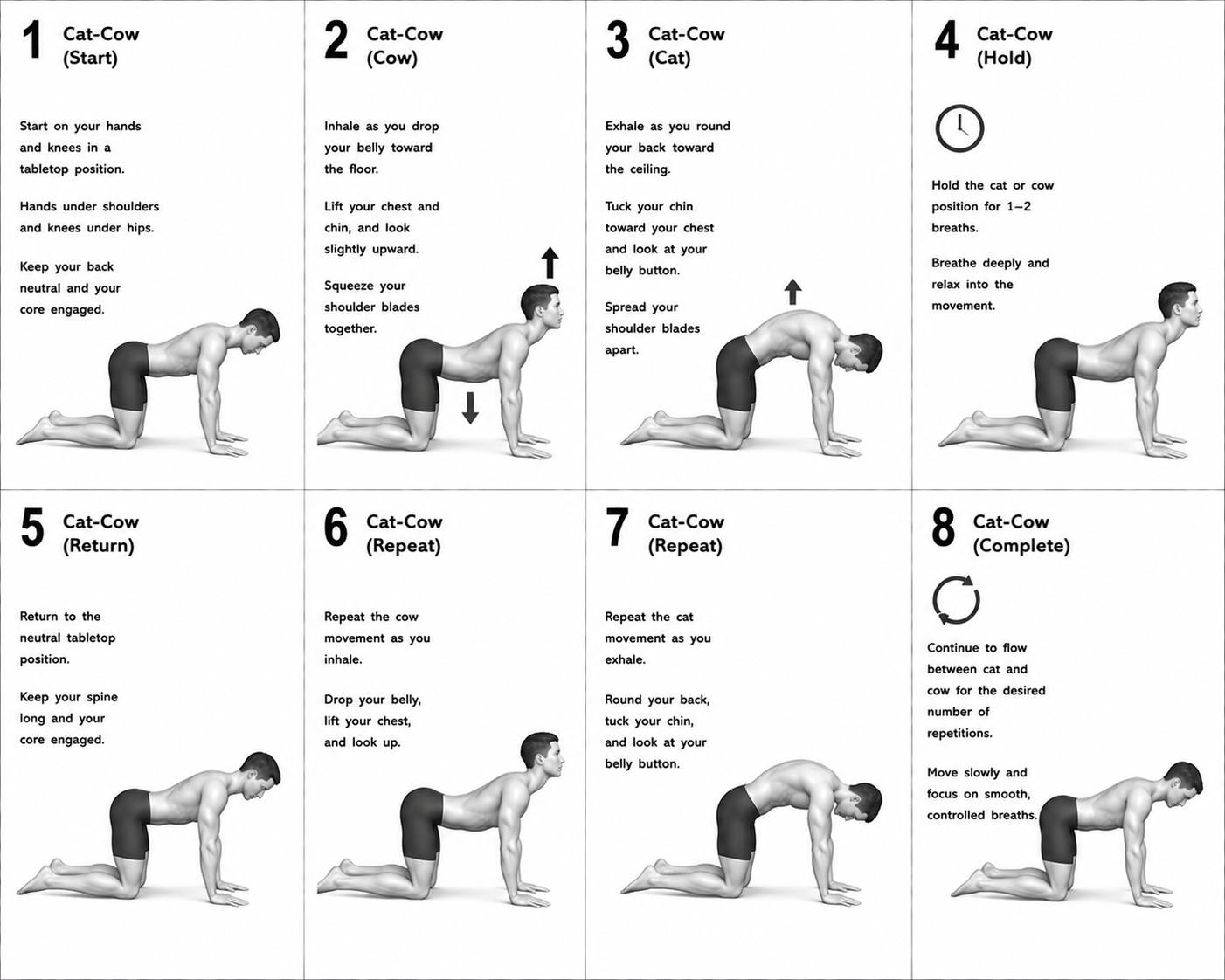
About This Exercise
The Cat-Cow stretch is a foundational yoga-inspired movement that mobilizes your entire spine. It alternates between spinal flexion (cat) and extension (cow), warming up the vertebrae and improving segmental mobility. This exercise is particularly effective for people who spend long hours sitting, as it reverses the forward-bending posture that develops from desk work.
Key Benefits
- Improves spinal flexibility
- Reduces lower back tension
- Enhances core awareness
- Promotes thoracic mobility
Form Cues & Tips
- •Move slowly and deliberately through each position
- •Coordinate movement with your breath
- •Feel the stretch throughout your entire spine
- •Avoid rushing through repetitions
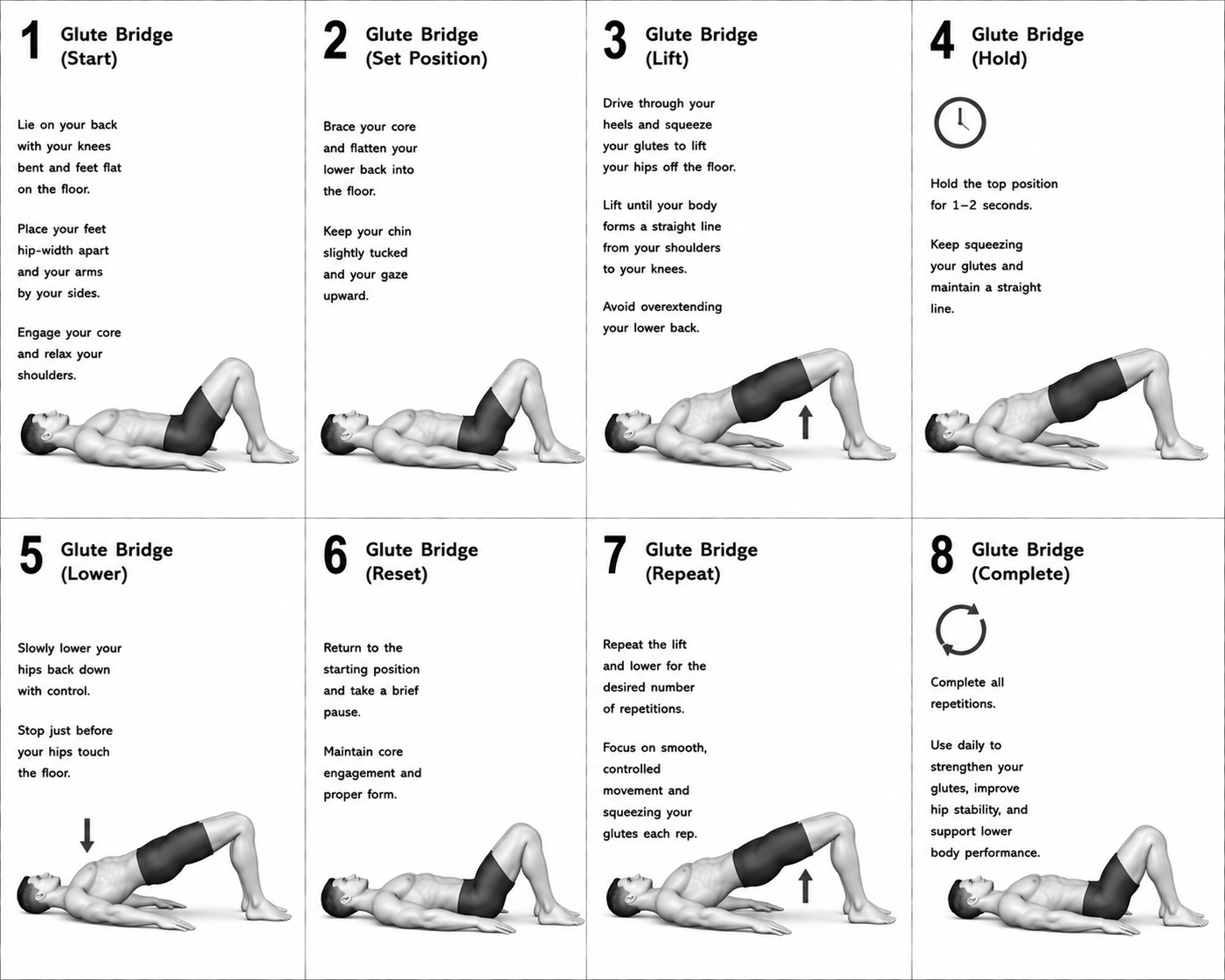
About This Exercise
The Glute Bridge is one of the most effective exercises for counteracting 'dead butt syndrome' — a condition where prolonged sitting causes your glutes to become inactive and weak. When your glutes don't fire properly, your lower back takes on extra load, leading to pain and poor posture. This exercise reactivates your glutes and helps restore proper hip-spine mechanics.
Key Benefits
- Activates weak glutes
- Reduces lower back strain
- Improves hip extension
- Strengthens posterior chain
Form Cues & Tips
- •Drive through your heels, not your toes
- •Squeeze your glutes at the top of each rep
- •Keep your core braced throughout
- •Avoid hyperextending your lower back
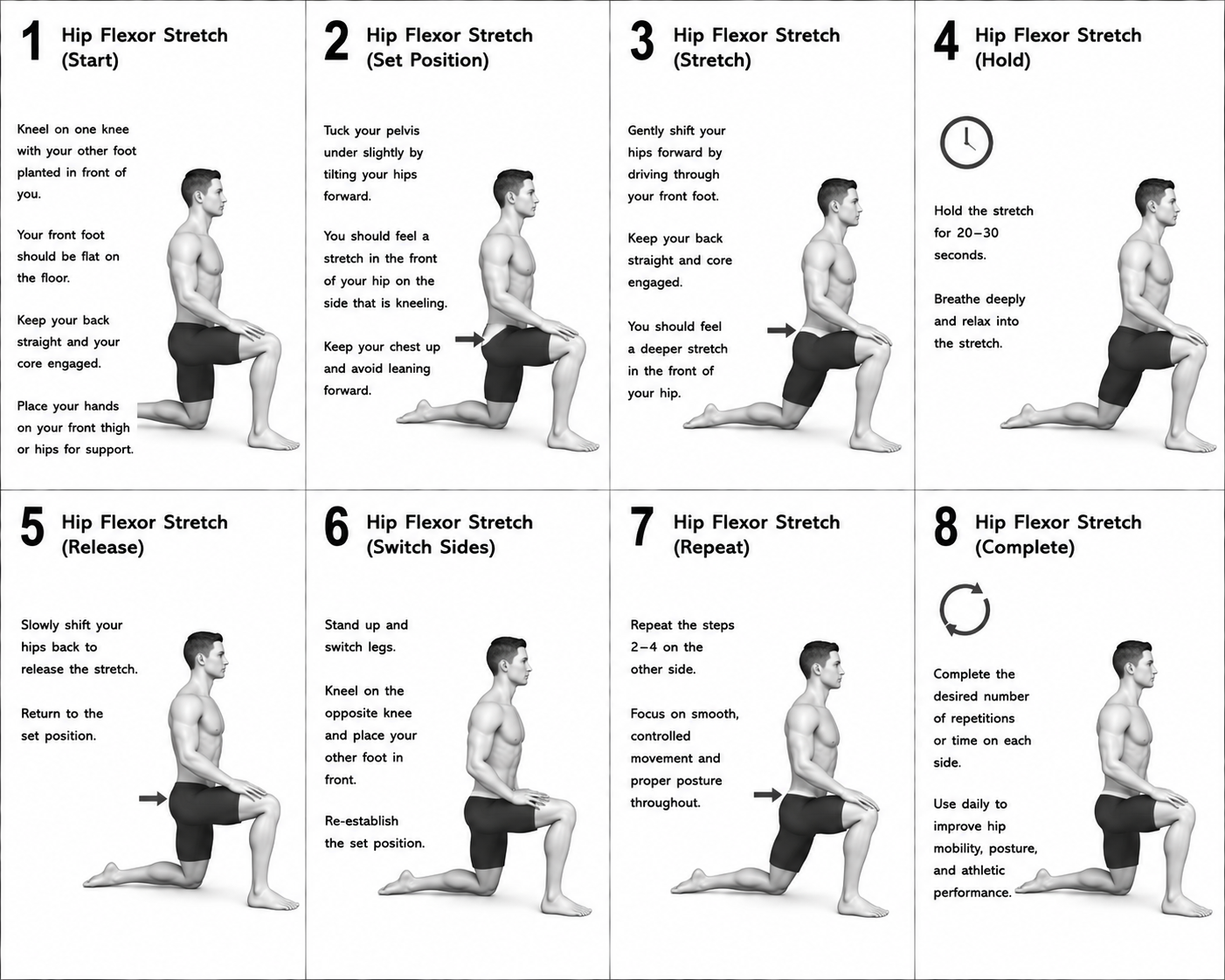
About This Exercise
Tight hip flexors are one of the primary causes of poor posture. When your hip flexors (iliopsoas) become shortened from prolonged sitting, they pull your pelvis forward, creating an anterior pelvic tilt. This tilt cascades up your spine, causing your lower back to arch excessively and your upper back to round forward. The Hip Flexor Stretch directly addresses this issue by lengthening these muscles.
Key Benefits
- Lengthens tight hip flexors
- Reduces anterior pelvic tilt
- Improves hip mobility
- Alleviates lower back pain
Form Cues & Tips
- •Maintain a neutral spine throughout
- •Feel the stretch in the front of your hip
- •Avoid leaning forward excessively
- •Breathe deeply and relax into the stretch
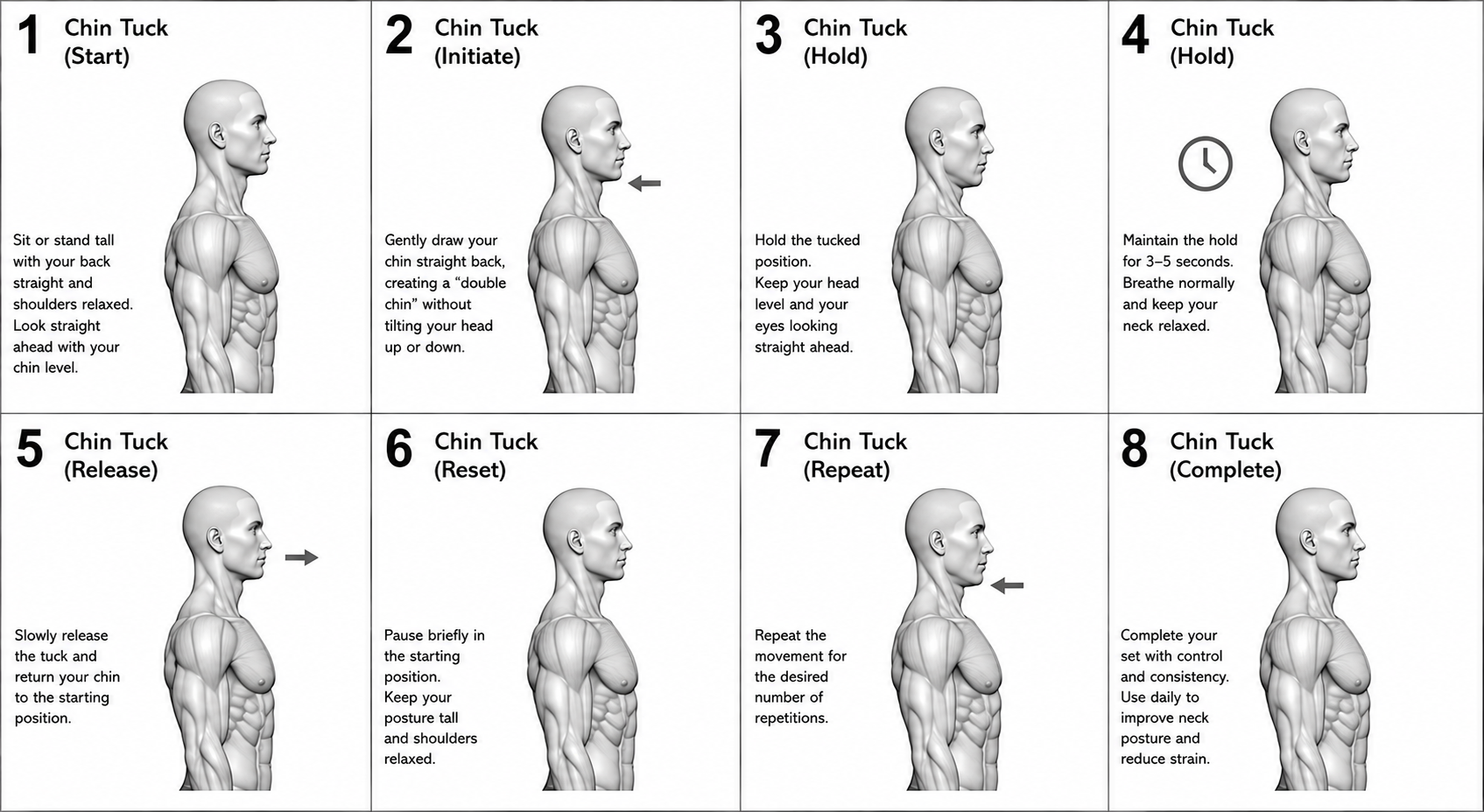
About This Exercise
Forward head posture (FHP) is one of the most common postural deviations, especially among people who work at computers or use smartphones frequently. For every inch your head moves forward, it adds approximately 10 pounds of stress to your cervical spine. The Chin Tuck is a simple but powerful exercise that retrains your neck muscles to maintain proper head position over your shoulders.
Key Benefits
- Corrects forward head posture
- Strengthens deep neck flexors
- Reduces neck strain
- Improves cervical alignment
Form Cues & Tips
- •Keep your eyes looking straight ahead
- •Draw your chin straight back, not down
- •Avoid tilting your head up or down
- •Maintain the position with control
About This Exercise
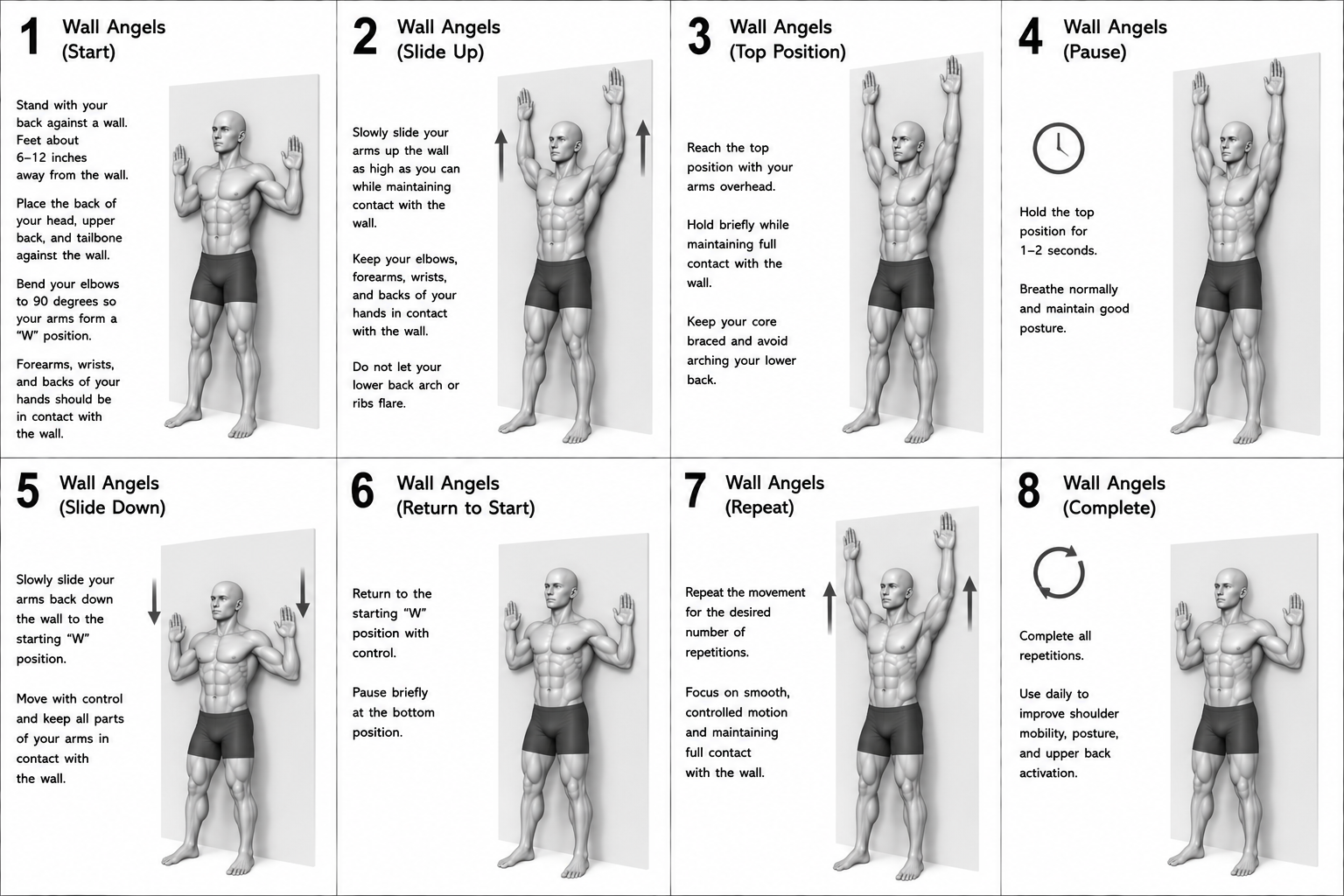
Wall Angels are an excellent exercise for correcting the rounded shoulder posture that develops from excessive sitting and forward-reaching activities. This movement retrains your shoulder blades to move properly and strengthens the muscles that pull your shoulders back. By improving shoulder mobility and scapular stability, Wall Angels help restore proper upper back alignment.
Key Benefits
- Improves shoulder mobility
- Corrects rounded shoulders
- Strengthens upper back
- Enhances scapular control
Form Cues & Tips
- •Keep your entire back against the wall
- •Move slowly and maintain contact
- •Do not let your lower back arch away from the wall
- •Focus on smooth, controlled motion
About This Exercise
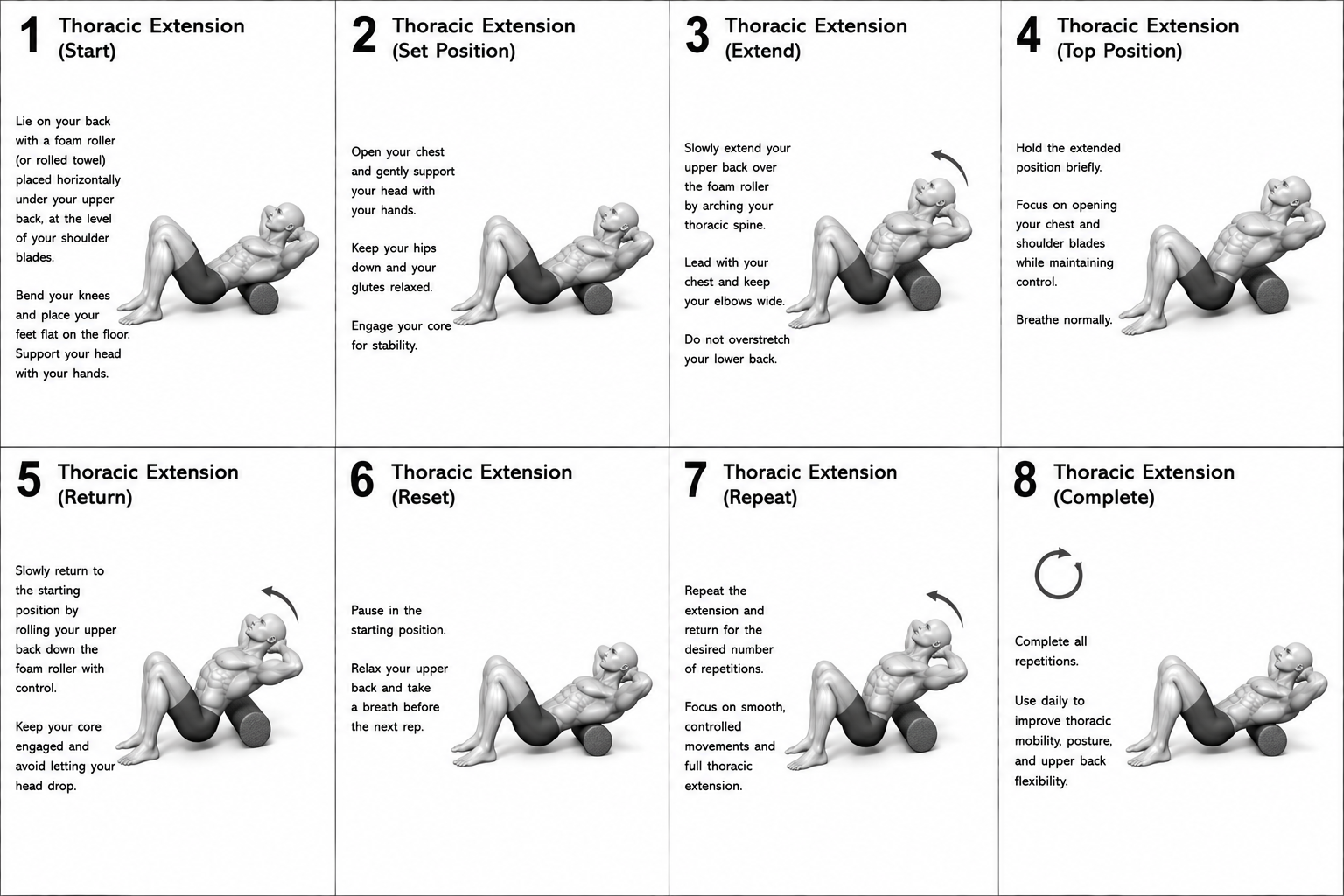
The thoracic spine (mid-back) is the most mobile segment of your spine, yet it often becomes stiff from prolonged sitting and poor posture. When your thoracic spine loses mobility, your lower back and neck compensate, leading to pain and dysfunction. The Thoracic Extension exercise, performed over a foam roller, restores mobility to this critical region and helps reverse the forward-bending posture.
Key Benefits
- Opens up the chest
- Reduces upper back rounding
- Improves thoracic spine mobility
- Alleviates shoulder tension
Form Cues & Tips
- •Position the foam roller at your shoulder blade level
- •Support your head with your hands
- •Move slowly and avoid forcing the extension
- •Do not overextend your lower back
About This Exercise
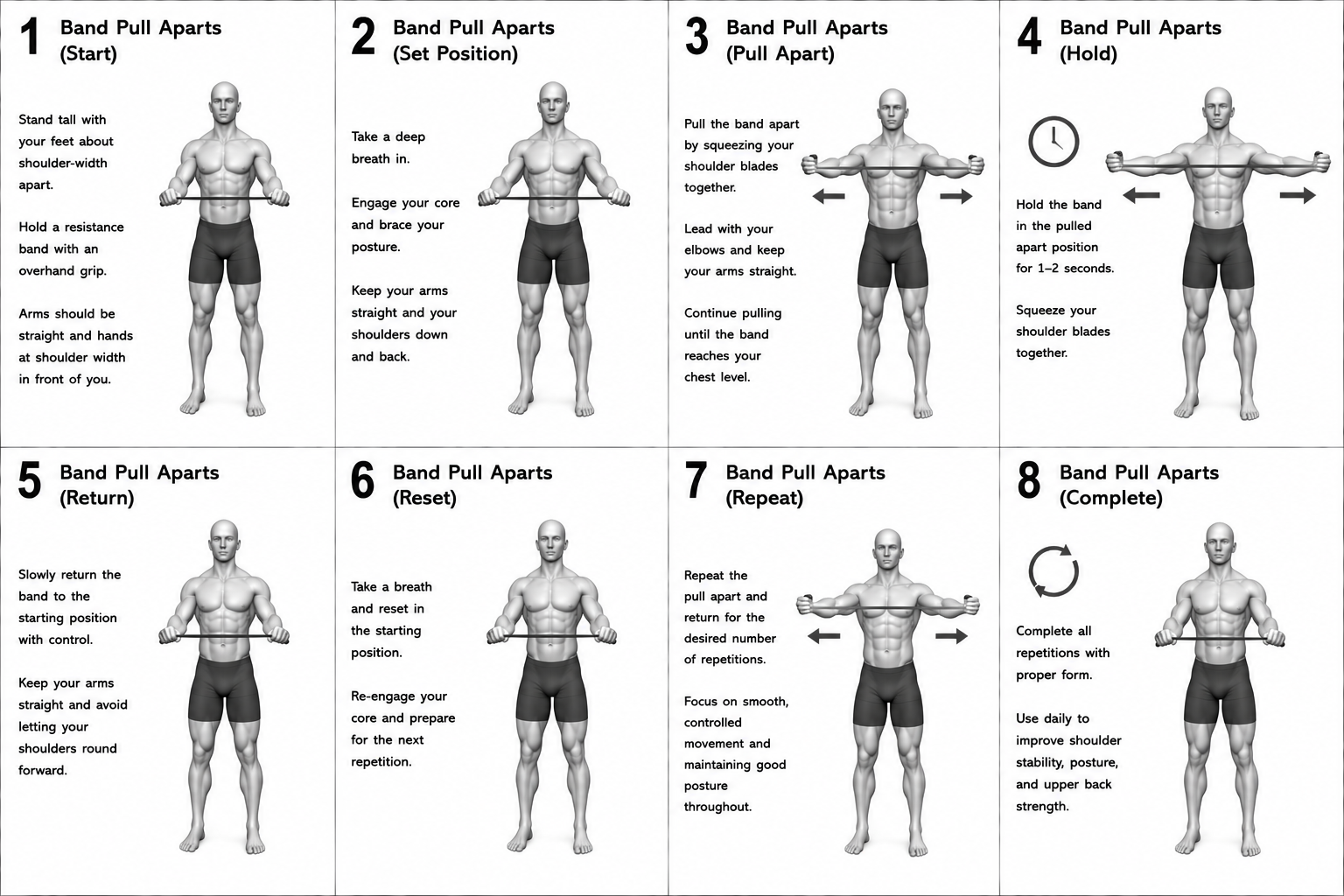
Band Pull Aparts are a simple yet highly effective exercise for strengthening the muscles that pull your shoulders back. These muscles (rhomboids, rear deltoids, and middle trapezius) are often weak in people with poor posture. By regularly performing Band Pull Aparts, you create muscular balance and train your body to maintain proper shoulder position throughout the day.
Key Benefits
- Activates upper back muscles
- Strengthens rear deltoids
- Improves shoulder stability
- Corrects rounded shoulders
Form Cues & Tips
- •Keep your arms straight throughout the movement
- •Squeeze your shoulder blades together at the end
- •Move with control, no jerking motions
- •Maintain good posture during the exercise
About This Exercise
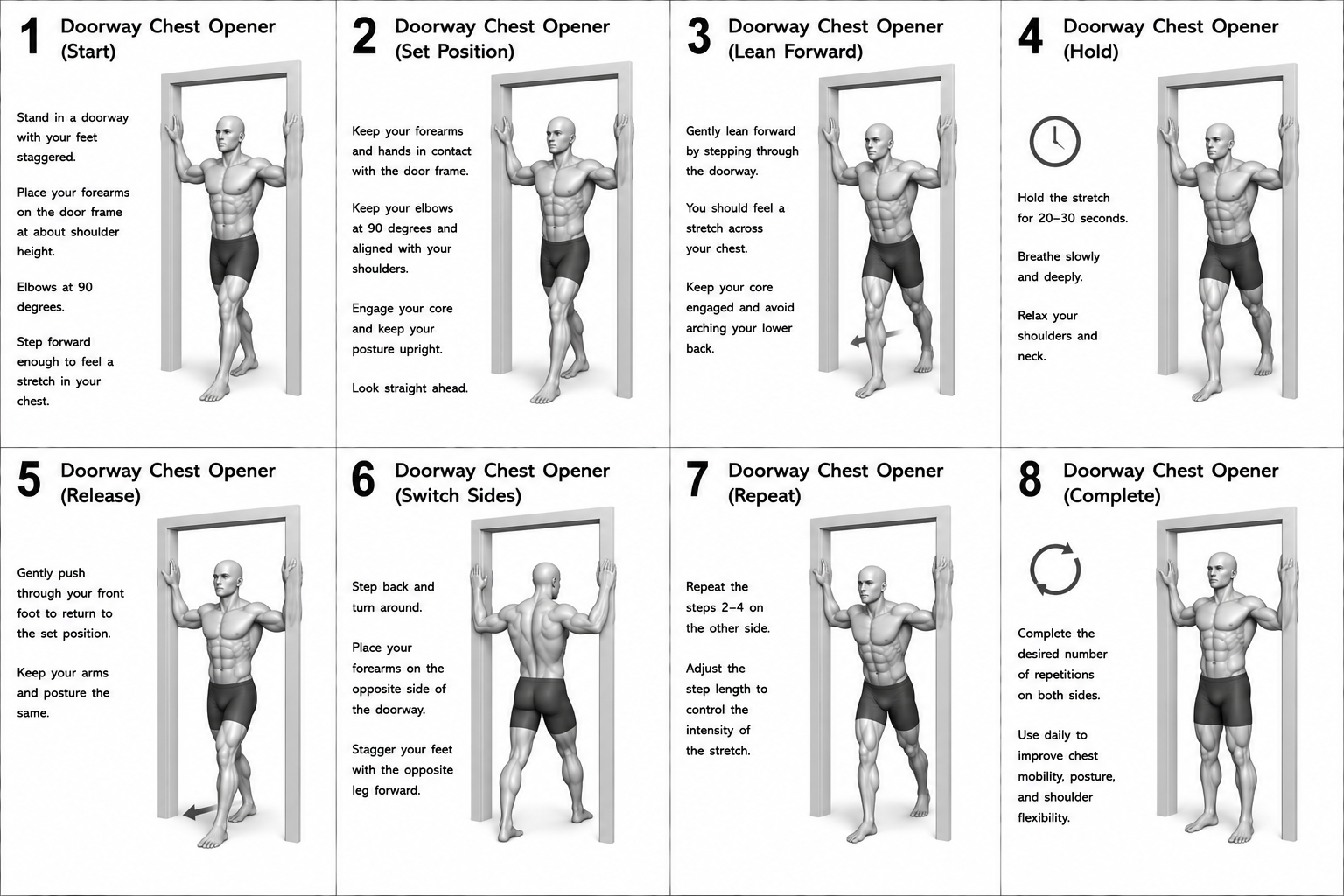
Tight chest muscles are a major contributor to rounded shoulder posture. When your pectorals become shortened and tight from repetitive forward-reaching activities, they pull your shoulders forward and down. The Doorway Chest Opener is a highly effective stretch that lengthens these muscles and helps restore proper shoulder position. This exercise also improves your breathing by opening up your rib cage.
Key Benefits
- Stretches tight chest muscles
- Opens up the front of the shoulders
- Reduces forward shoulder roll
- Improves breathing capacity
Form Cues & Tips
- •Maintain an upright posture throughout
- •Feel the stretch across your chest
- •Avoid arching your lower back excessively
- •Breathe slowly and deeply
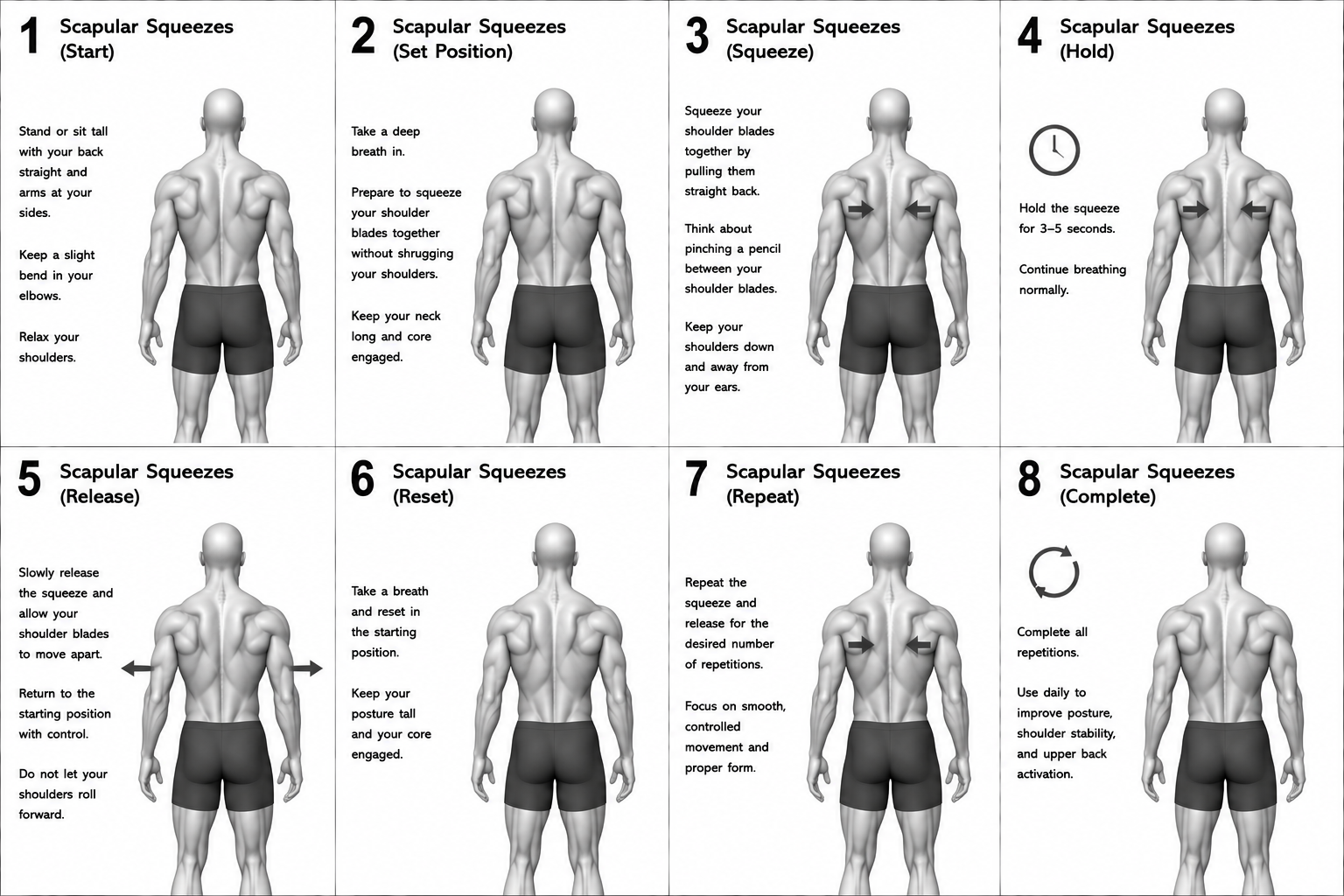
About This Exercise
Scapular Squeezes are a foundational exercise for retraining your shoulder blade muscles to work properly. Many people with poor posture have weak or inhibited scapular stabilizers, which prevents them from maintaining proper shoulder position. This simple exercise awakens these muscles and teaches them to engage throughout your daily activities.
Key Benefits
- Activates shoulder blade muscles
- Improves scapular stability
- Reduces shoulder tension
- Strengthens upper back
Form Cues & Tips
- •Imagine pinching a pencil between your shoulder blades
- •Move your shoulders down and back
- •Maintain the squeeze for 3-5 seconds
- •Keep your neck relaxed
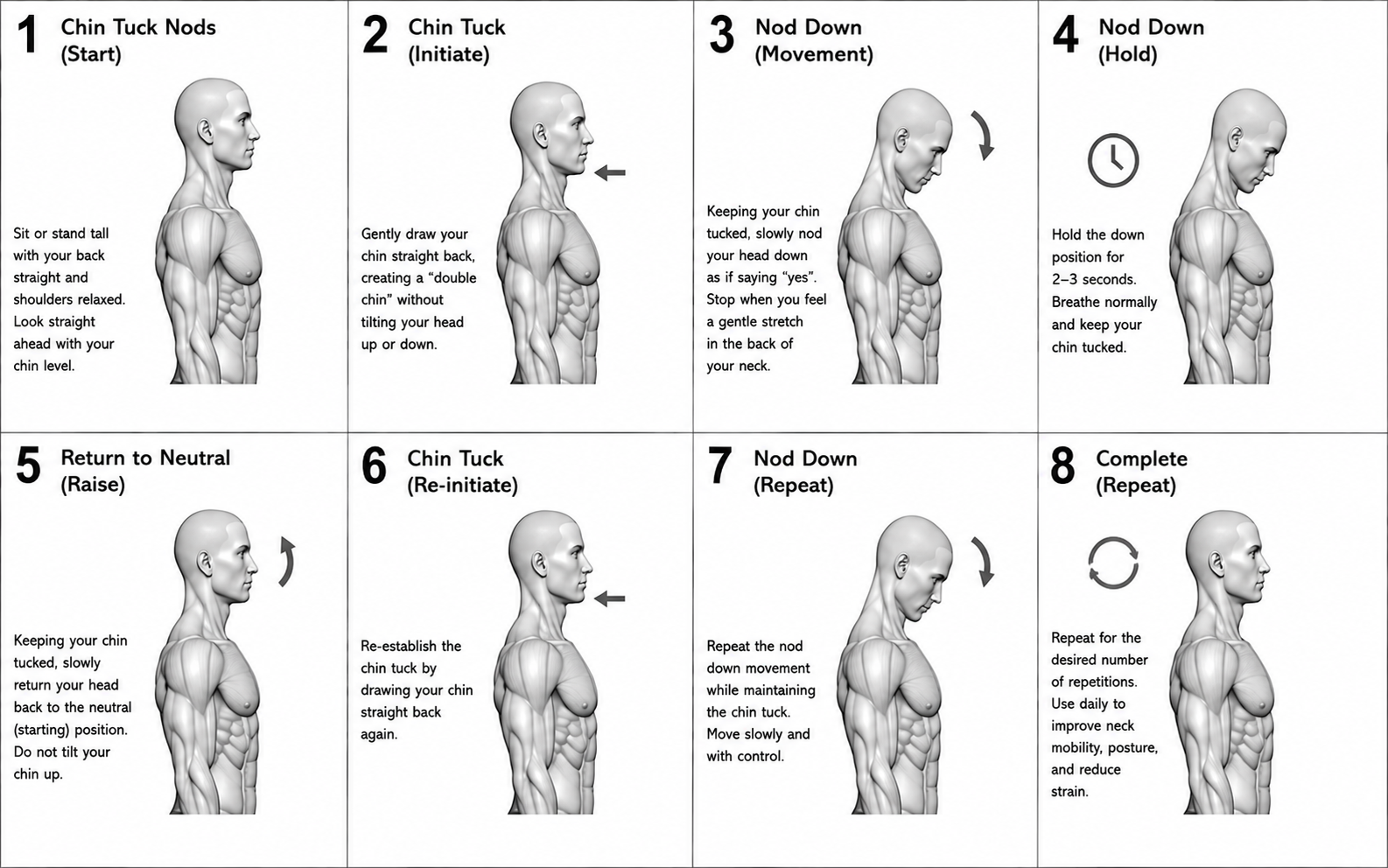
About This Exercise
Chin Tuck Nods combine the benefits of the basic Chin Tuck with gentle cervical flexion. This exercise not only retrains your neck muscles to maintain proper head position but also adds a gentle mobility component. It's particularly effective for people who experience neck pain from forward head posture.
Key Benefits
- Corrects forward head posture
- Strengthens neck muscles
- Improves cervical mobility
- Reduces neck pain
Form Cues & Tips
- •Maintain the chin tuck position throughout
- •Nod slowly and deliberately
- •Feel the gentle stretch in the back of your neck
- •Avoid jerky movements
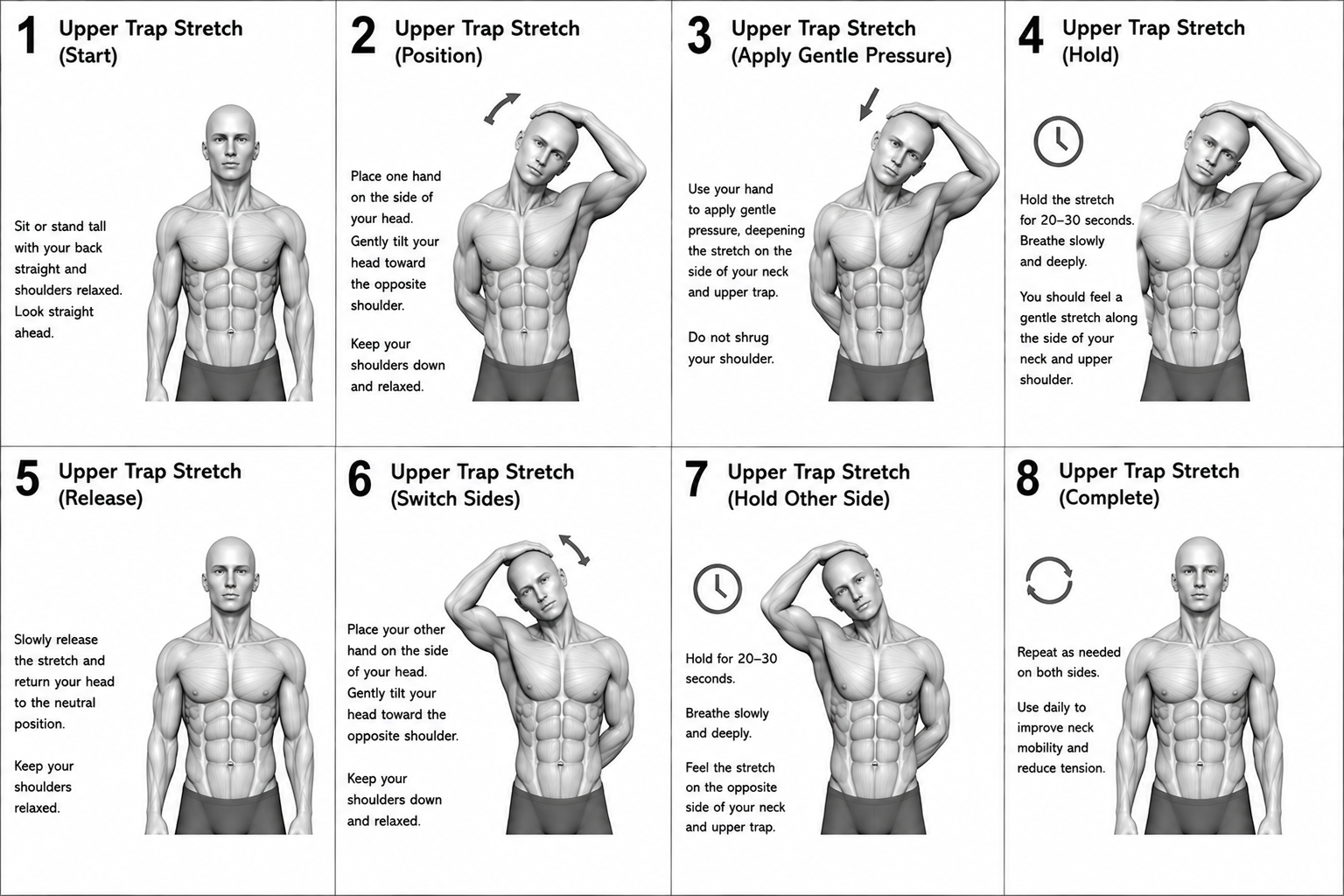
About This Exercise
The upper trapezius muscle is notorious for holding tension, especially in people with poor posture and high stress levels. Tight upper traps restrict your neck mobility and contribute to forward head posture. The Upper Trap Stretch is a simple yet highly effective way to release this tension and improve your cervical range of motion.
Key Benefits
- Reduces neck tension
- Improves cervical mobility
- Alleviates headaches
- Decreases shoulder tension
Form Cues & Tips
- •Tilt your head gently toward your shoulder
- •Apply gentle pressure with your hand
- •Feel the stretch on the opposite side of your neck
- •Breathe deeply and relax into the stretch
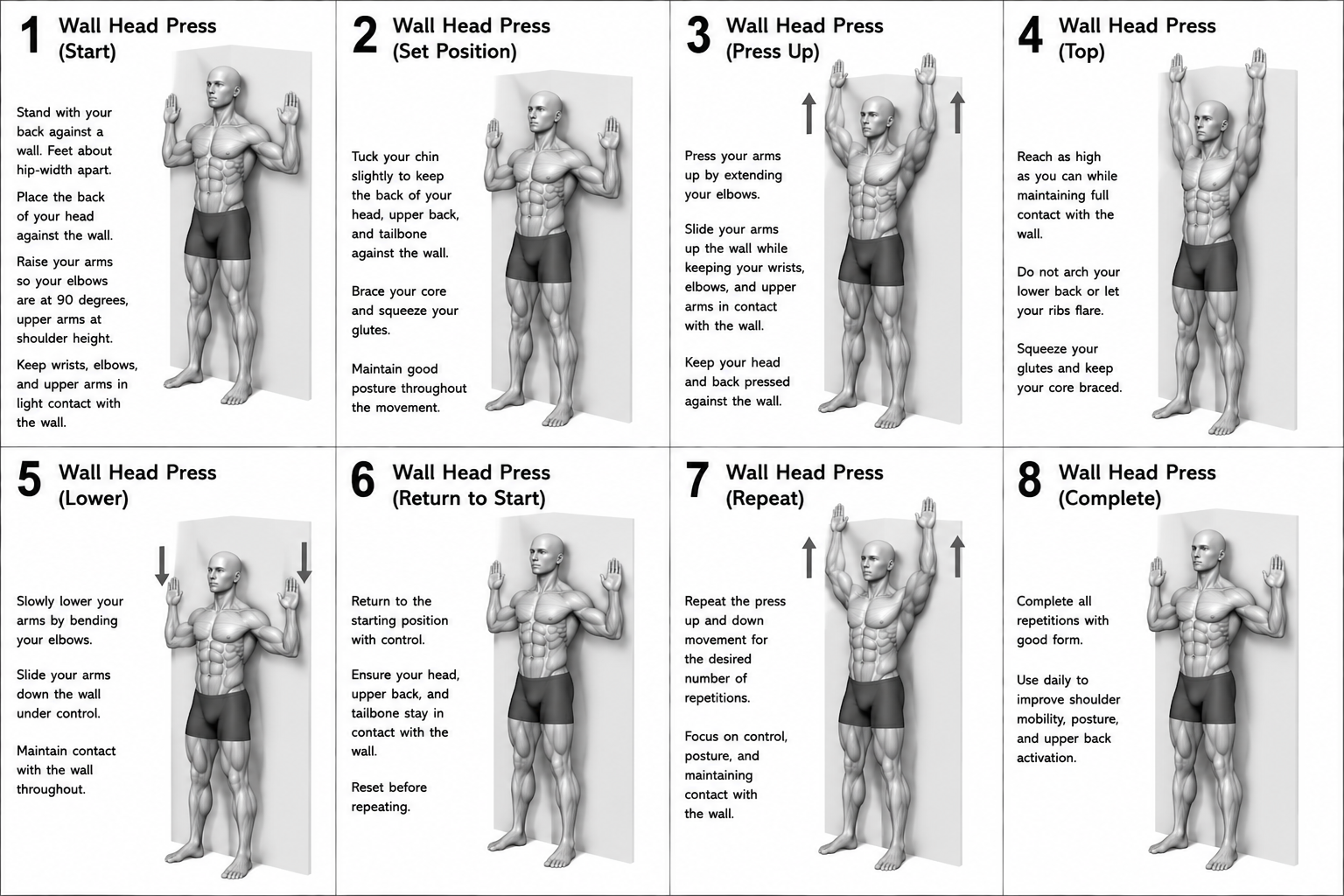
About This Exercise
The Wall Head Press is an advanced variation of Wall Angels that adds an upper body pressing component. This exercise builds strength in your upper back and shoulders while maintaining the mobility benefits of the basic Wall Angels. It's an excellent progression for people who have mastered the foundational exercise.
Key Benefits
- Strengthens upper back
- Improves shoulder mobility
- Corrects rounded shoulders
- Enhances postural awareness
Form Cues & Tips
- •Keep your entire body against the wall
- •Press your arms up slowly and with control
- •Maintain contact with the wall throughout
- •Do not arch your lower back
The Complete 30-Minute Posture Routine
Perform this routine 5-6 days per week for optimal results. You should notice improvements in posture, reduced pain, and increased mobility within 2-4 weeks.
- Cat-Cow Stretch (2 min)
- Scapular Squeezes (1 min)
- Hip Flexor Stretch (2 min)
- Thoracic Extension (2 min)
- Upper Trap Stretch (2 min)
- Doorway Chest Opener (2 min)
- Glute Bridge (2 min)
- Band Pull Aparts (2 min)
- Wall Angels (2 min)
- Chin Tuck (1 min)
- Chin Tuck Nods (1 min)
- Scapular Squeezes (2 min)
- Wall Head Press (2 min)
- Cat-Cow Stretch (2 min)
- Hip Flexor Stretch (2 min)
- Upper Trap Stretch (2 min)
- Deep breathing (1 min)
Tips for Maximum Results
Transform Your Posture in 2-4 Weeks
Follow this proven 12-exercise routine combined with SportsReflector's AI form analysis. Track every movement, get real-time feedback, and see measurable improvements in your alignment and movement quality.
✓ Paid subscription required. • ✓ Paid subscription required. • ✓ 94.4% form accuracy